We’ve all been there: sitting across a candlelit table, struggling to keep conversation flowing, silently wondering if this date will lead to anything meaningful. But what if there’s a better way to build connection—one that doesn’t involve staring at each other over expensive meals?
Science says there is. Welcome to The Connection Experiment, where we explore why active dates create stronger bonds than passive dining experiences. Let’s dive into the research-backed reasons why doing things together beats just eating together. 🧠
The Problem with Dinner Dates: The Interview Effect 🍽️❌
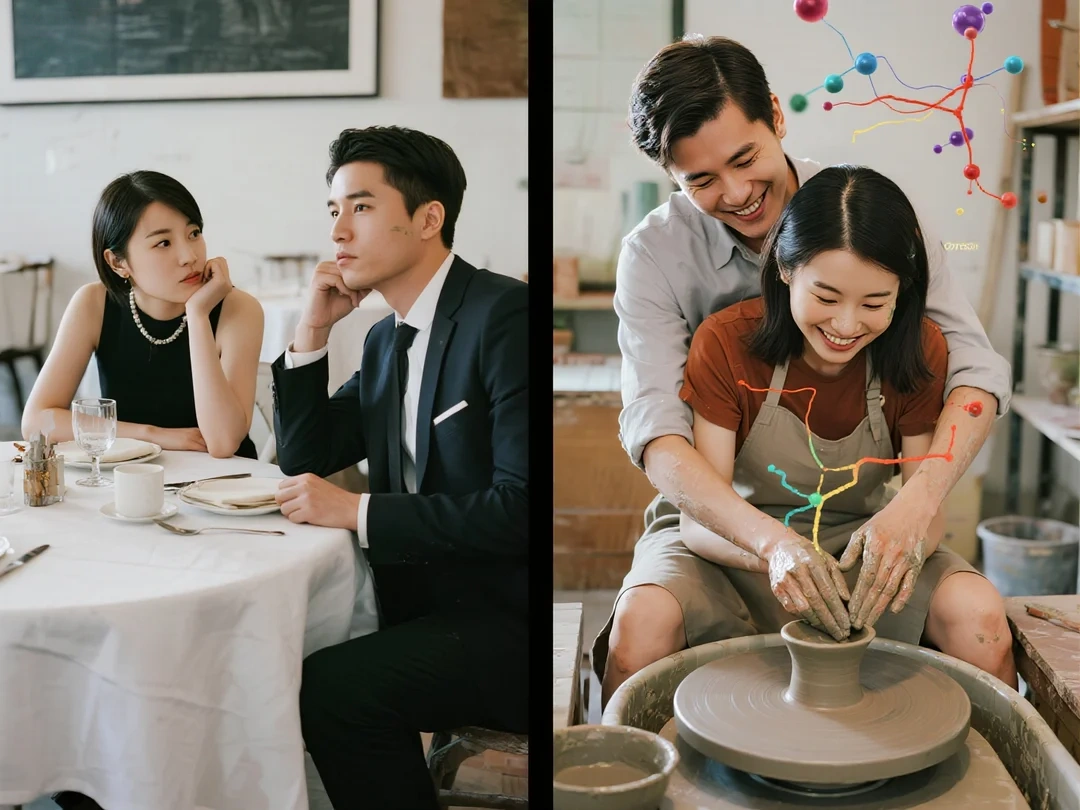
Traditional dinner dates often feel like job interviews. You ask predictable questions (“What do you do?”), give rehearsed answers, and try to make a good impression. This creates pressure, inhibits authenticity, and rarely leads to genuine connection.
Research shows that high-pressure social situations activate our threat response, making it harder to be ourselves and connect naturally. Dinner dates, with their formal structure and direct eye contact, often trigger this response.
The Science of Shared Experiences: Why Active Dates Work 🔬
1. The Power of Collaborative Flow 🤝
When you work together on a task—whether solving an escape room puzzle or creating pottery—you enter a state of “shared flow.” This collaborative state:
- Releases oxytocin (the bonding hormone)
- Creates synchronized brain activity
- Builds non-verbal communication skills
Study: University of Zurich found couples who engage in novel activities together show increased relationship satisfaction.
2. The Vulnerability Advantage 🥰
Active dates naturally create moments of mild vulnerability (failing at a pottery wheel, getting scared in a haunted house). These moments:
- Trigger authentic emotional responses
- Create shared laughter and inside jokes
- Break down social masks and defenses
Research: Brown University studies show shared vulnerability accelerates emotional intimacy.
3. Memory Multiplier Effect 🧠
Our brains remember emotional and novel experiences more vividly than routine activities. An exciting date creates:
- Stronger memory encoding
- More associative triggers (smells, sounds, feelings)
- Longer-lasting emotional impressions
Psychology Today: Novel experiences create more neural pathways, making memories more accessible and vivid.
The Active Date Menu: scientifically proven options 🎯
1. Pottery Class 🏺
- Why it works: Hands-on creativity, natural laughter at mistakes, tangible outcome
- Conversation Starter: “What would your 10-year-old self think of what we’re making right now?”
2. Escape Room 🔐
- Why it works: Problem-solving partnership, time pressure bonding, role revelation
- Conversation Starter: “What did you learn about how I handle stress from that experience?”
3. Cooking Class 👩🍳
- Why it works: Sensory engagement, practical teamwork, delicious reward
- Conversation Starter: “If we were to open a food truck together, what would we serve?”
4. Rock Climbing 🧗♂️
- Why it works: Physical trust building, encouragement exchange, goal achievement
- Conversation Starter: “What’s something outside your comfort zone that you’ve always wanted to try?”
5. Volunteer Together 🤝
- Why it works: Values alignment, altruism bonding, perspective sharing
- Conversation Starter: “What cause are you most passionate about and why?”
6. Dance Lesson 💃
- Why it works: Physical coordination, laughter at mistakes, rhythm connection
- Conversation Starter: “What song would perfectly describe our dancing style tonight?”
7. Hiking Adventure 🥾
- Why it works: Nature therapy, paced conversation, accomplishment sharing
- Conversation Starter: “What’s the most beautiful place you’ve ever seen in nature?”
The 3:1 Ratio: Why Active Dates Create Deeper Bonds 📊
Based on psychological studies, active dates provide:
- 3x more conversation topics (the activity itself, observations, shared reactions)
- 3x more memory anchors (sights, sounds, smells associated with the experience)
- 3x more vulnerability moments (natural opportunities for authentic expression)
Unlike dinner dates that rely solely on verbal connection, active dates engage multiple connection pathways simultaneously—verbal, physical, emotional, and experiential.
Your Action Plan: The Connection Experiment 🧪
This week, try replacing one dinner date with an active date and notice:
- How much easier conversation flows
- How many inside jokes you create
- How much more you remember about the date
- How naturally vulnerability emerges
The best relationships aren’t built over perfect meals—they’re built through shared experiences, mutual support, and authentic moments.
Which active date will you try first? Share your experiment plans below! 👇